Plating System - Turning a nickel plating line into software
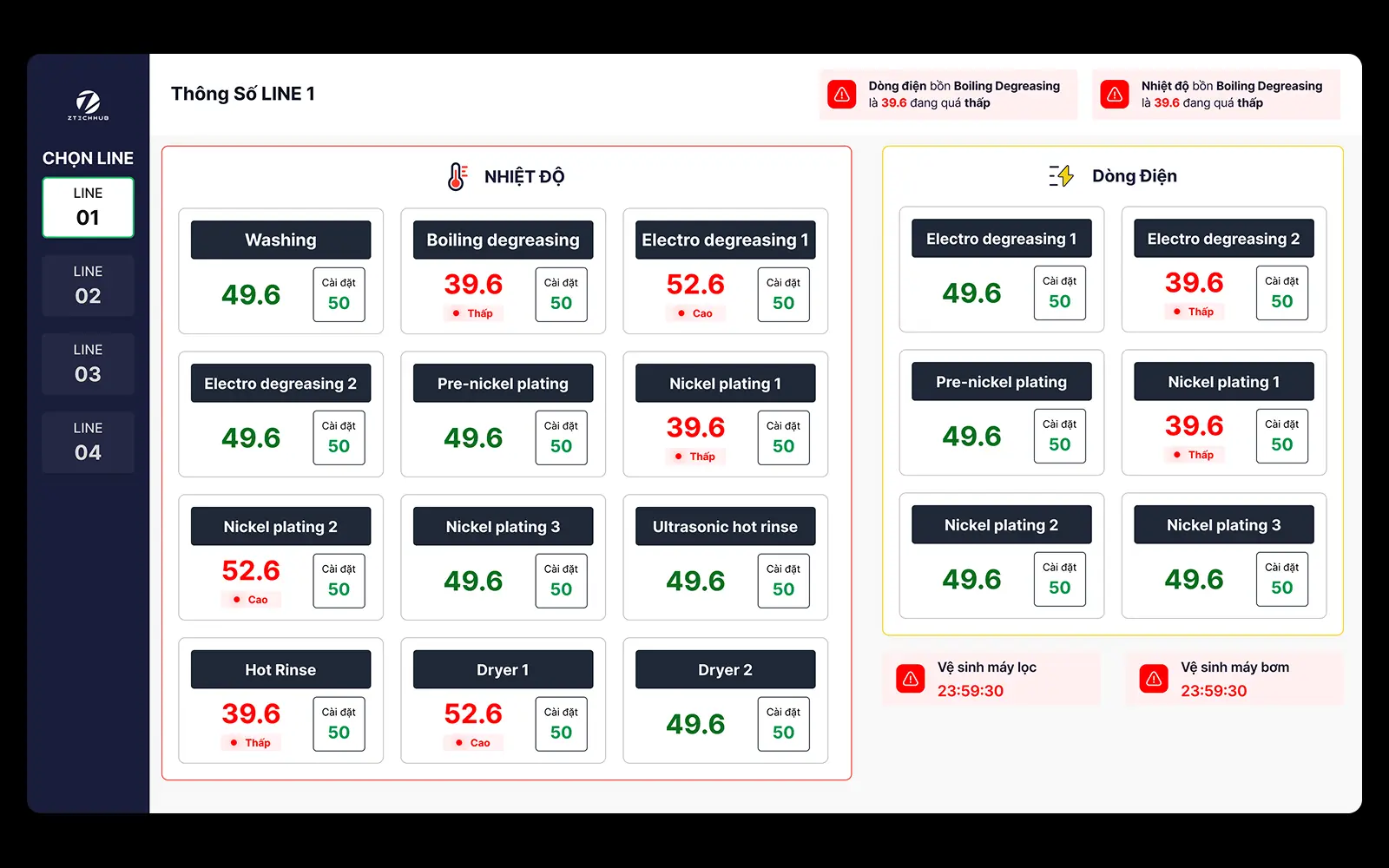
A nickel plating factory runs a 35 station automated line with three robots moving carriers between tanks. Everything the line knew about itself lived in PLC logic and in the heads of the people who had worked there longest. There was no history, no traceability, and no shared source of truth between the software team and the PLC engineers.
The hard part was never the interface. It was speaking the machine's language reliably, around the clock, without ever stalling production.
We made the datablock the contract. The software talks to the Siemens S7-1200 over snap7, reading temperature, current and robot state and writing setpoints back, with a watchdog watching the link and a shared variable map that both teams work from. Time series data goes to InfluxDB, business data to MongoDB, and the whole floor ends up on one screen in a browser tab.
- Services
- Industrial softwareand PLC integration
- Our Works
- UI/UX DesignDeveloping
- Completion time
- 3 months
- Tech Stack
- Node.js, snap7, MongoDB,InfluxDB, React
Challenges
- Read and write a live Siemens S7-1200 without ever interrupting a production line that does not stop.
- Give the software team and the PLC engineers one shared map of the machine, instead of two private ones.
- Record every carrier's temperature and current curve so a finished product can be traced back to how it was made.
- Put 35 stations, three robots and their alarms on a single screen an operator can read at a glance.
Key Achievements
- Direct S7-1200 read and write over snap7, with a watchdog on the link.
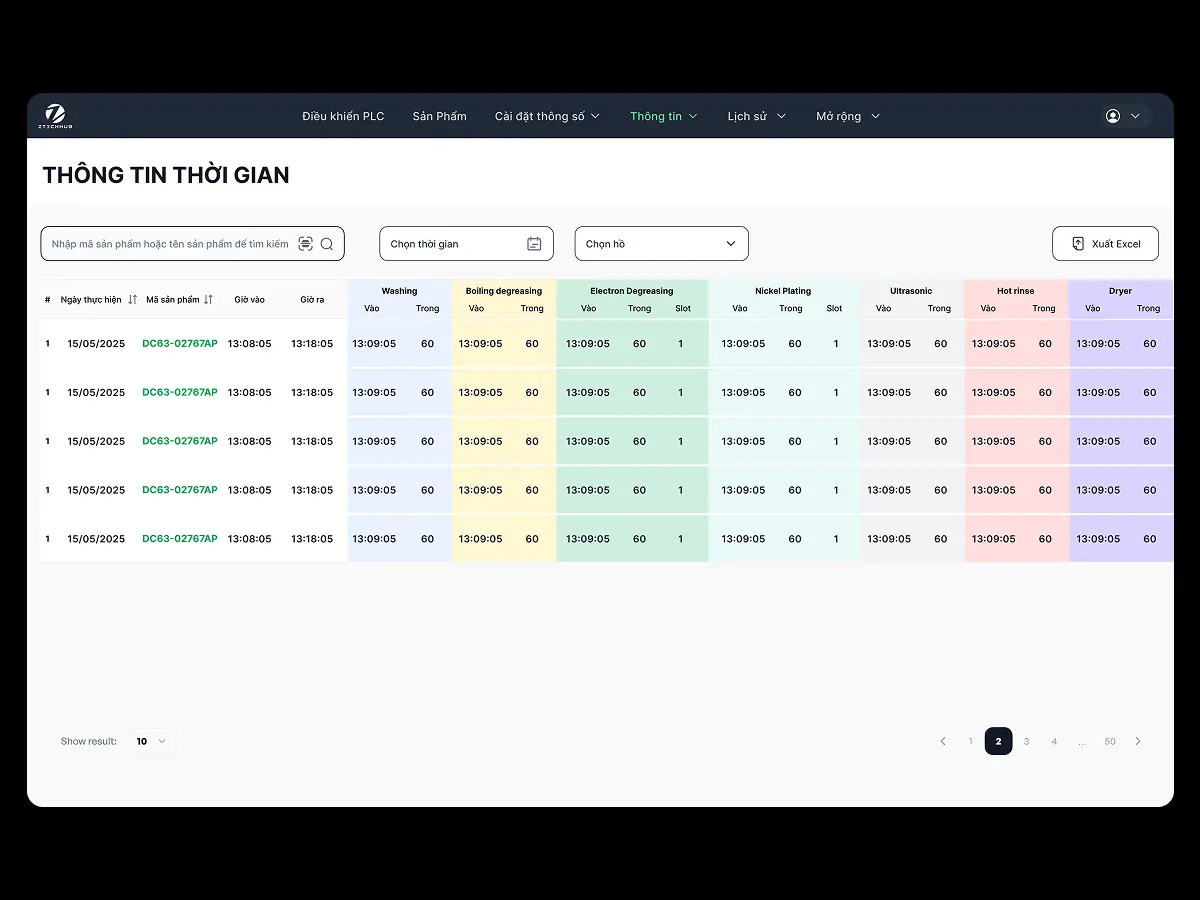
- Every carrier carries a QR code, and every product now has a plating history with its full temperature and current curve.
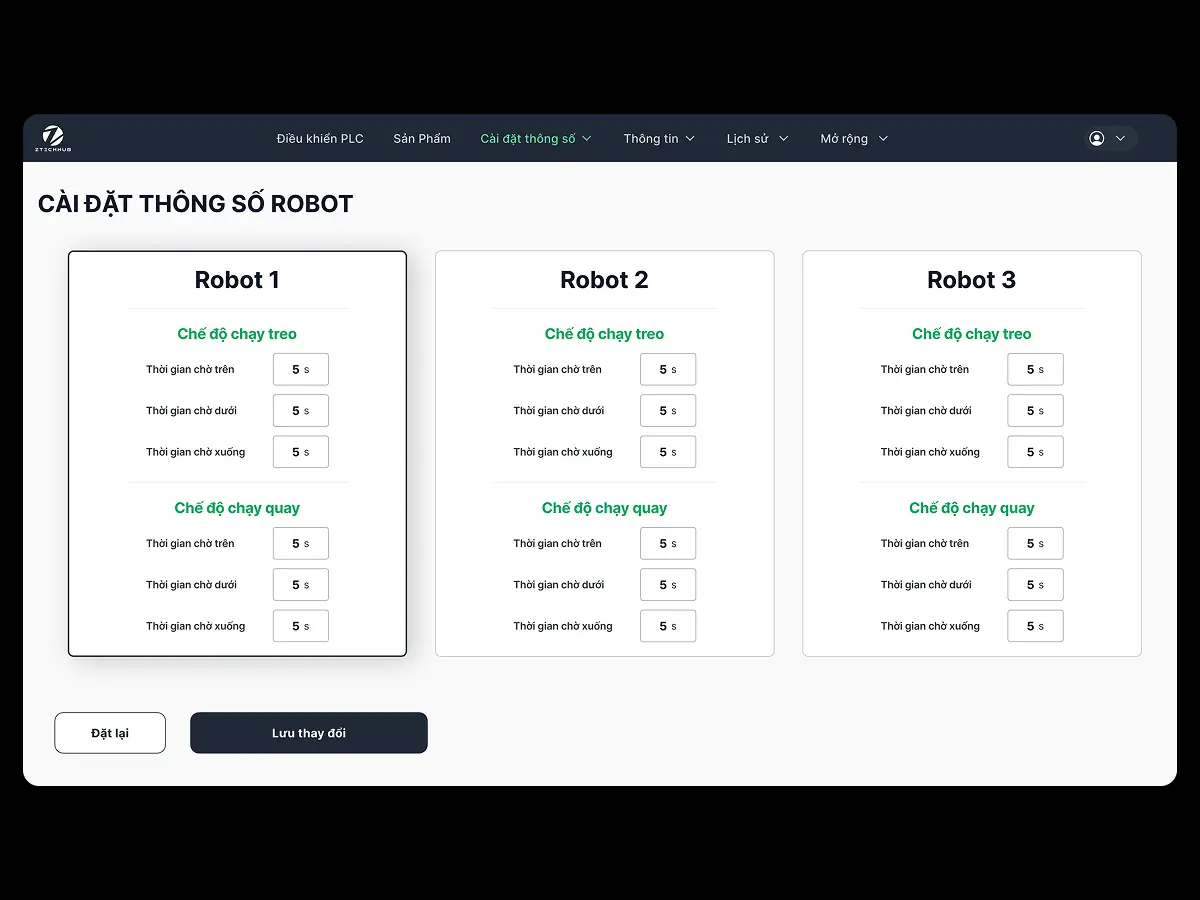
- Operators set parameters, drive the robots and pull reports from one browser tab.
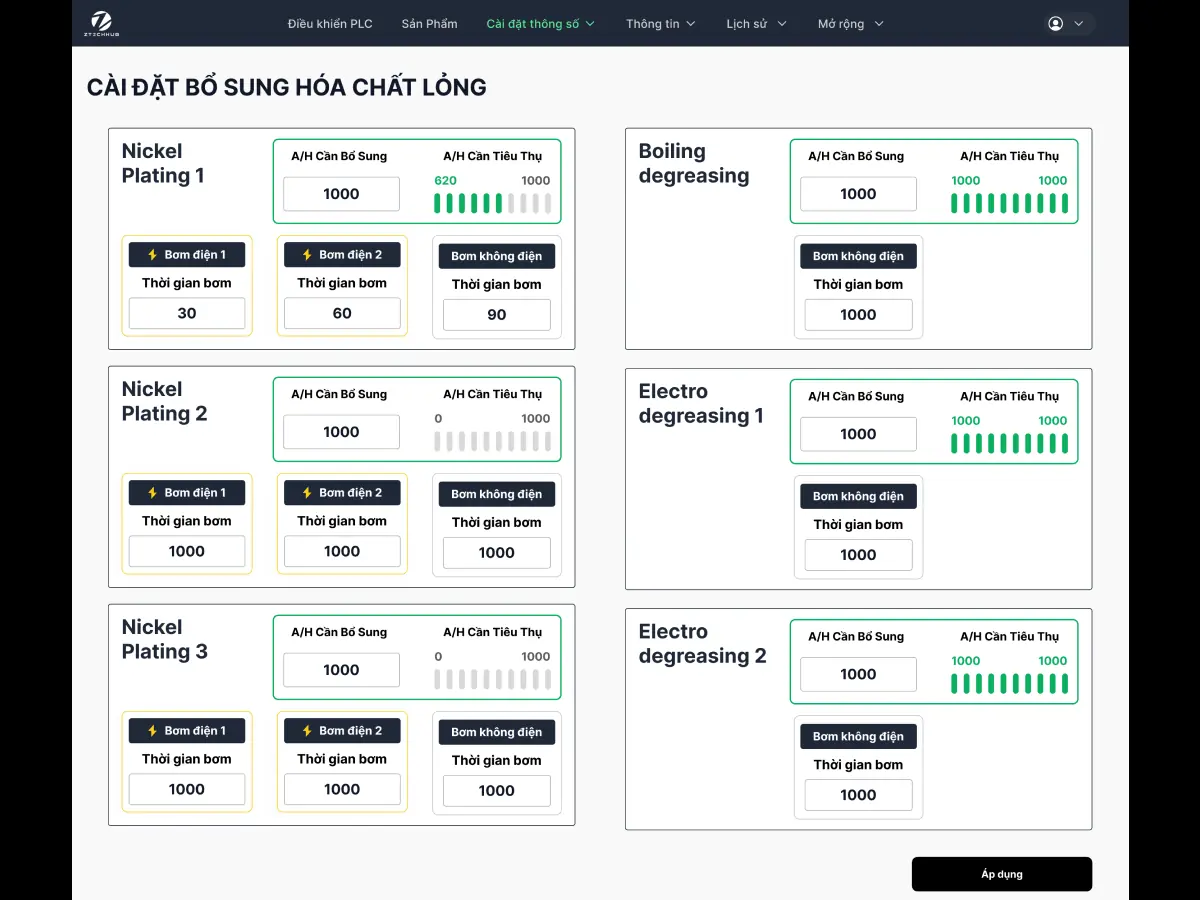
- Chemicals are dosed automatically by ampere-hour rather than by estimate.
- The shared PLC variable map became the single source of truth both teams work from.
Product showcase